

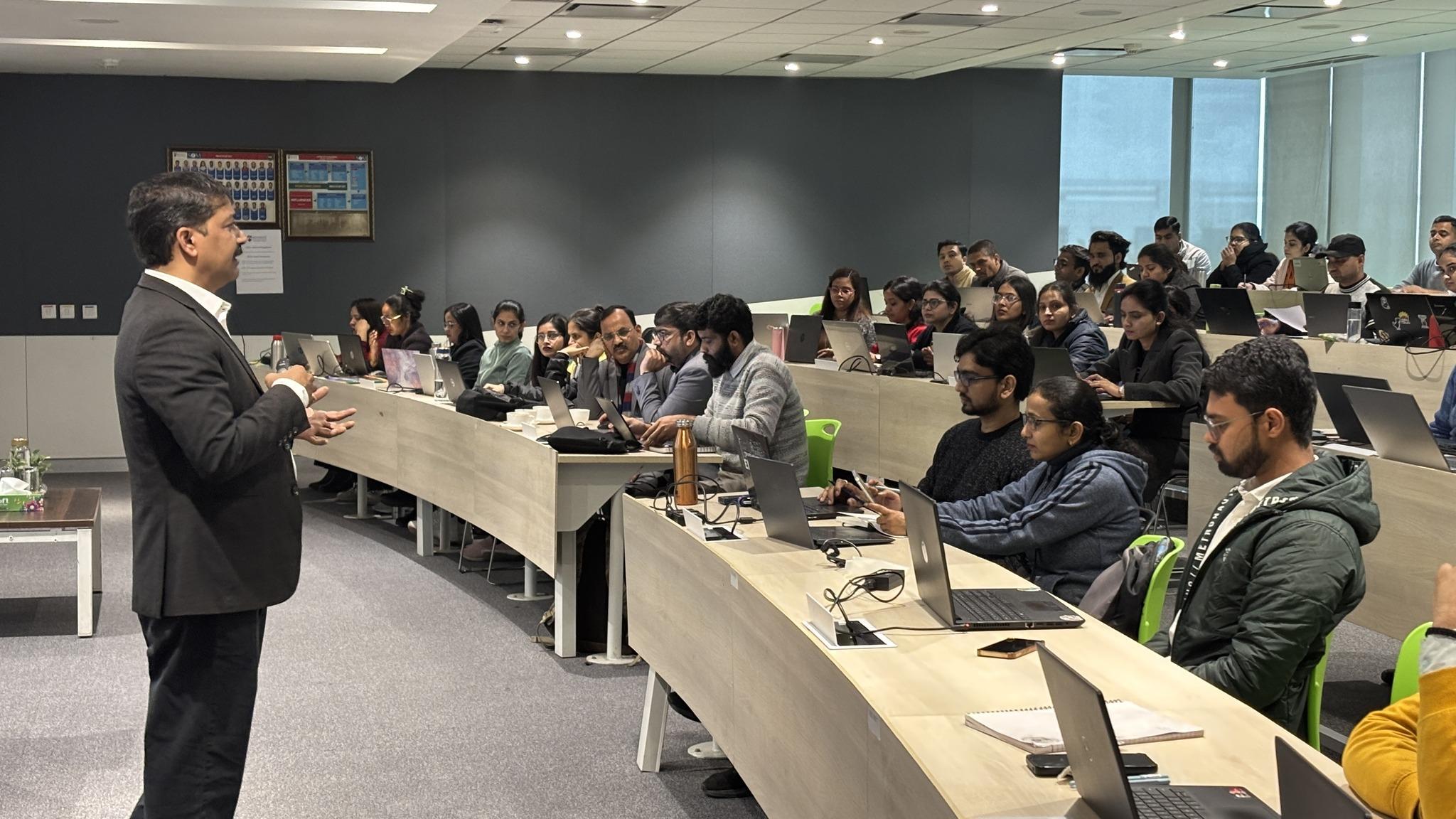
Choosing a PGDM college involves more than comparing rankings, fees and campus photographs. One important question students should consider is whether a larger campus provides better career preparation than an institution with stronger corporate connections.
When evaluating industry exposure vs campus size PGDM, industry exposure generally deserves greater priority because it helps students understand business operations, apply classroom concepts and develop professional skills. However, campus infrastructure also matters because students need a supportive environment for academic learning, research and personal development.
The right decision is to choose a PGDM college that combines meaningful corporate interaction with the facilities required for a well-rounded management education.
Quick Answer
Industry exposure matters more than campus size when choosing a PGDM college because management education requires practical understanding of how businesses operate. Internships, live projects, corporate mentoring, industry visits and guest lectures help students connect classroom concepts with real business situations. However, campus infrastructure should not be ignored. A good PGDM institution should provide modern classrooms, computer laboratories, library resources and collaborative learning spaces alongside regular industry interaction.
Why Does Industry Exposure Matter in PGDM?
Industry exposure matters because a PGDM programme should help students understand how management concepts work in actual business environments, rather than relying entirely on classroom learning.
Subjects such as marketing, finance, human resources, business analytics and operations become more meaningful when students see how organisations apply them in their daily activities.
Consider a student studying marketing. Classroom lessons may explain customer segmentation, market research, branding and sales strategies. However, working on a live marketing project can help the student understand how companies identify customers, analyse competitors, plan campaigns and measure performance.
Similarly, finance students benefit from understanding how financial analysis supports business decisions, while human resource management students gain insight into recruitment, employee engagement and organisational behaviour.
This is why industry exposure in PGDM colleges is an important factor to evaluate before admission.
Some common forms of corporate exposure include:
- Corporate guest lectures: Industry professionals share their experiences, discuss business challenges and explain changing workplace expectations.
- Internships: Students get opportunities to work in organisational environments and understand professional responsibilities.
- Live projects: Students work on practical business assignments and apply classroom knowledge to specific problems.
- Corporate mentoring: Experienced professionals guide students on career choices, professional development and industry expectations.
- Industrial visits: Students observe business operations, production processes, supply chains and organisational practices.
- Industry conferences: Students interact with professionals, understand emerging business trends and develop professional awareness.
The AICTE Internship Policy discusses how internships help students understand company operations, develop professional networks and gain experience with real-life projects.
For a PGDM student, these experiences can make management concepts more relevant and provide a clearer understanding of different career paths.
Does a Bigger Campus Mean Better Management Education?
A large campus can improve the student experience, but its size alone does not determine the quality of management education.
A spacious campus may provide sports facilities, recreational areas, auditoriums, libraries, modern classrooms and opportunities for extracurricular activities. These facilities can contribute to student development and create an environment where learning extends beyond regular classroom sessions.
However, students should distinguish between the availability of facilities and the actual quality of learning.
For example, a college may have a large auditorium, but how frequently does it organise meaningful industry interactions? It may have several classrooms, but do students regularly participate in case studies, presentations and group discussions?
The usefulness of infrastructure depends on how effectively students can access and use it.
Consider the following comparison:
| Campus facility | How it supports PGDM students |
|---|---|
| Modern classrooms | Support interactive lectures, presentations and case discussions |
| Computer laboratories | Help students practise data analysis, financial modelling and business software |
| Library and digital resources | Support research, assignments and management case studies |
| Auditorium and seminar halls | Provide space for guest lectures, conferences and academic events |
| Sports and recreation facilities | Encourage physical activity, teamwork and student participation |
| Collaborative learning spaces | Support group assignments, discussions and project work |
These facilities have genuine educational value. A college should not compromise on basic academic infrastructure simply because it offers corporate exposure.
The better question is not how many acres a college occupies, but whether its facilities support the academic and professional development of its students.
Industry Exposure vs Campus Size: Key Differences
Industry exposure and campus infrastructure contribute to different aspects of a student’s educational experience.
Industry exposure primarily supports practical learning and professional awareness, whereas campus infrastructure provides the environment in which students study, collaborate and develop their interests.
| Evaluation factor | Industry exposure | Campus infrastructure |
|---|---|---|
| Practical learning | Internships, live projects and business assignments | Classrooms, laboratories and learning resources |
| Corporate understanding | Guest lectures, industry visits and mentoring | Seminar halls and event facilities |
| Professional development | Networking, communication and workplace exposure | Clubs, presentations and group activities |
| Career preparation | Understanding job roles and business expectations | Access to academic and digital resources |
| Learning environment | Exposure to actual business situations | Comfortable and collaborative study spaces |
| Industry connections | Interaction with professionals and organisations | Facilities to host corporate events |
For example, imagine two students pursuing a PGDM.
The first studies at an institution with an extensive campus but limited opportunities to interact with companies. The second studies at a college with a smaller campus but participates in internships, live projects, corporate mentoring and regular industry sessions.
The second student may gain more opportunities to understand business responsibilities before entering full-time employment.
This does not mean the second student will automatically receive a better job. Individual performance, academic knowledge, communication skills, specialisation and recruitment conditions also influence career outcomes.
The comparison simply highlights why practical exposure should carry considerable weight when evaluating a management institution.
How Do Internships and Live Projects Help Students?
Internships and live projects help students understand how management concepts are applied outside the classroom.
An internship introduces students to the responsibilities of a particular business function. A marketing intern, for instance, may assist with market research, campaign planning or customer analysis. A finance intern may work with financial reports, data interpretation or business analysis, depending on the organisation and assigned responsibilities.
Live projects provide another form of practical learning. Students may work on market research, competitor analysis, customer behaviour studies, business development or operational improvement assignments.
The main difference is that internships generally involve working within an organisation for a defined period, while live projects focus on specific business assignments.
At NDIM, the official internship programme describes two internship opportunities for students: a winter internship after Semester 1 and a summer internship after Semester 2. Students submit reports after each internship, which are evaluated through viva sessions involving faculty members and industry professionals.
Its live industry projects provide additional opportunities to apply management theories through practical assignments connected with corporate environments. These projects are described as an important part of the institute’s learning approach, alongside its internship opportunities.
Students can also refer to the AICTE National Internship Portal to understand the internship opportunities listed by participating organisations and government bodies.
Before taking admission, ask whether internships are structured, whether students receive guidance, how projects are evaluated and whether the assignments are relevant to their chosen specialisation.
The number of opportunities alone is not enough. Their learning value matters more.
What Should You Check Before Choosing a PGDM College?
Before selecting a management institution, evaluate its academic quality, industry engagement, infrastructure and career support together.
A college’s promotional material may highlight impressive buildings, corporate logos or placement figures. Students should look beyond these presentations and understand what they will actually experience during the two years of study.
Here are six important factors to examine.
1. Industry interaction throughout the programme
Find out how frequently students interact with working professionals. Ask whether guest lectures, corporate conferences, industry visits and mentoring sessions are part of regular academic activities.
2. Internship structure
Understand when internships take place, how students receive opportunities and whether the institution provides faculty guidance during the process.
3. Live project opportunities
Check whether students work on practical assignments connected with actual business requirements. Ask about the nature of these projects and how their performance is evaluated.
4. Faculty experience
Look at the academic qualifications, teaching experience and relevant industry backgrounds of faculty members. Teachers with practical business experience can connect theoretical concepts with workplace situations.
5. Academic infrastructure
Evaluate classrooms, computer laboratories, library resources, internet access and spaces for group discussions. These facilities should support the academic requirements of the programme.
6. Placement transparency
Review placement reports, batch sizes, the number of students placed, average salary, highest salary and recruiter information. Understand whether the published figures relate to a specific batch and whether they are supported by verifiable information.
The AICTE Approval Process Handbook 2024–2027, announced by the Ministry of Education, discusses the approval framework for institutions offering technical and management programmes. It also highlights the importance of quality infrastructure and qualified faculty in institutional approvals.
Students should independently verify the current approval and accreditation status of the specific programme they intend to pursue.
A college should be evaluated on what it consistently delivers, rather than what it promises during admission counselling.
How Does NDIM Combine Campus Facilities with Industry Exposure?
A useful way to evaluate a PGDM institution is to examine how its infrastructure and industry engagement work together.
New Delhi Institute of Management (NDIM) provides an example through its combination of academic facilities and corporate interaction opportunities.
The institute offers a two-year, full-time PGDM programme with dual specialisations. Its official programme information describes AICTE approval, MBA equivalence and ASIC, UK accreditation. Students should refer to the current programme information for the applicable academic and approval details.
On the academic side, NDIM provides international-standard classrooms, a green campus, collaborative learning spaces and a dedicated computer research centre. Its infrastructure information also describes a modern IT laboratory with more than 300 computer seats and campus-wide Wi-Fi connectivity.
These facilities support classroom teaching, research, presentations, data analysis and student activities. Students can understand the available campus infrastructure when comparing the academic facilities of management institutions.
The institute also has a dedicated Corporate Resource Centre (CRC), which connects students with industry professionals through seminars, conferences, symposiums, guest lectures, networking events, live projects and industry or plant visits.
According to NDIM’s official corporate resource centre information, the CRC also coordinates career guidance, counselling and training activities. These include workshops on resume writing, group discussions and mock interviews.
The institute’s corporate mentoring programme provides another dimension of industry interaction, with industry professionals guiding students on professional development and business understanding.
For someone comparing PGDM colleges, the important consideration is how these opportunities fit into the overall learning experience. Students should understand which activities are available to their batch, how frequently they take place and how they relate to their chosen specialisation.
This is a more meaningful way to evaluate a management institution than judging it by campus size alone.
Which Factor Should Get More Weight in Your Decision?
Industry exposure should generally receive greater weight than campus size when comparing PGDM colleges, but the final decision should consider the complete educational experience.
Your priorities may depend on your career interests and learning requirements.
| Your career interest | What to evaluate more closely |
|---|---|
| Marketing | Sales projects, market research, brand management exposure and internships |
| Finance | Financial analysis projects, industry mentoring and finance-related internships |
| Human Resources | Recruitment exposure, employee engagement projects and HR mentoring |
| Business Analytics | Data analysis tools, computer laboratories and practical analytics assignments |
| Entrepreneurship | Business projects, mentoring, innovation support and networking opportunities |
| General management | Faculty quality, industry engagement, infrastructure and placement support |
Students interested in marketing may benefit from practical campaign assignments and customer research. Finance aspirants should examine opportunities to work with financial data and understand business decisions. Those interested in analytics should check access to relevant software, data resources and practical assignments.
A large campus may be an important preference if you value sports, recreation, accommodation or a wider campus community. However, these preferences should be considered alongside the academic and professional value of the programme.
The best PGDM college is not necessarily the one with the largest campus or the longest recruiter list. It is the one that offers a strong learning environment, meaningful industry engagement, relevant academic training and transparent career support.
Conclusion
When choosing a PGDM college, industry exposure generally matters more than campus size because it helps students connect management theory with practical business situations. Internships, live projects, corporate mentoring and interaction with industry professionals can contribute significantly to professional development.
At the same time, good infrastructure, experienced faculty and academic resources remain essential.
Instead of choosing a college based only on its campus photographs or promotional claims, evaluate the learning opportunities you will receive throughout the programme. A balanced institution that combines practical exposure with strong academic support can provide a more meaningful foundation for your management career.
Frequently Asked Questions
1. Is industry exposure more important than campus size in a PGDM college?
Yes, industry exposure generally has greater importance because it helps students understand real business situations and develop practical management skills. However, campus infrastructure is also necessary for effective academic learning and student development.
2. What type of industry exposure should a PGDM college provide?
A good PGDM college should provide opportunities for internships, live projects, corporate guest lectures, industry visits and professional mentoring. These activities help students understand different business functions and workplace expectations.
3. Can students develop management skills without industry exposure?
Students can develop theoretical management knowledge through classroom teaching, case studies and academic assignments. However, regular interaction with industry professionals and practical projects can provide additional insight into how businesses operate.
4. Does campus infrastructure affect PGDM placements?
Campus infrastructure can support learning through modern classrooms, computer laboratories, libraries and seminar facilities. However, placements also depend on academic performance, student skills, industry connections, recruitment opportunities and individual interview performance.
5. How can students evaluate industry exposure before taking PGDM admission?
Students should examine the institution’s internship structure, live project opportunities, corporate mentoring activities, guest lectures and industry partnerships. They should also ask for specific examples of activities conducted for recent batches instead of relying only on promotional claims.